Biologic Drug Analytics
Biologics Analytical Development Services
ProtaGene provides analytical development services for biologics to sponsors progressing biologic drug candidates from discovery through clinical readiness. The team supports developability assessment, lead candidate selection, analytical method qualification, forced degradation studies, and comparability work. Sponsors use these data packages to make decisions on candidate selection, process changes, and regulatory submissions. ProtaGene runs this analytical work across recombinant proteins, monoclonal antibodies, fusion proteins, bi- and multispecifics, antibody-drug conjugates, and complex glycoproteins.
Biologics Analytical Development Capabilities
ProtaGene’s portfolio covers the analytical activities sponsors rely on between candidate selection and clinical readiness. Each capability is scoped to the program’s phase and the questions the data needs to answer.
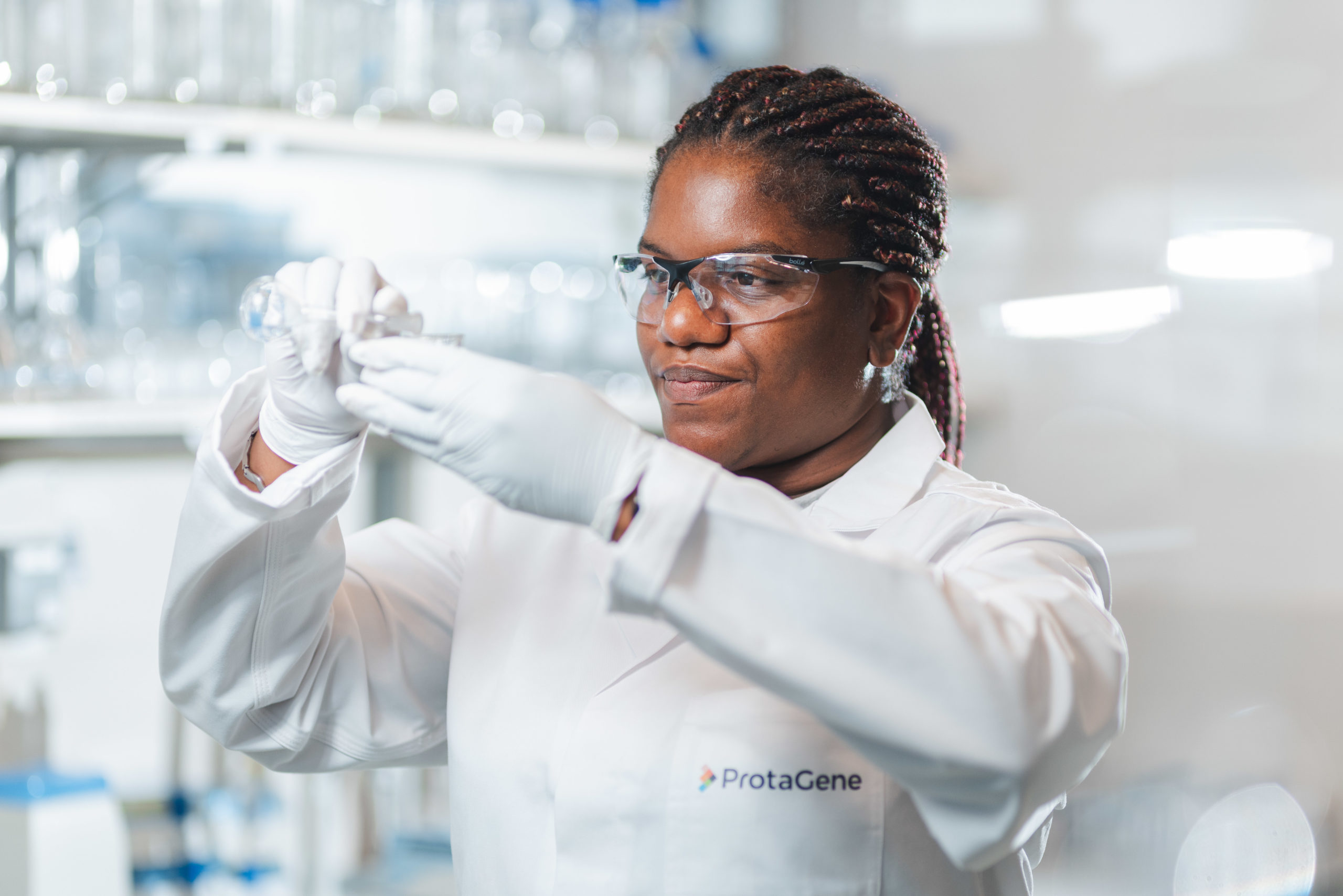

Developability Assessment
Developability assessment identifies which biologic candidates have the molecular properties needed for successful development. The work generates biophysical and biochemical data on each candidate, including primary structure confirmation, thermal stability, aggregation behavior, charge heterogeneity, glycan profile, and post-translational modifications. Sponsors use this data to compare lead candidates, identify liabilities early, and select the molecule that will carry the program forward.
ProtaGene combines high-resolution mass spectrometry, peptide mapping, biophysical characterization, and chromatographic methods to build a complete picture of each candidate. The analytical readouts highlight differences that matter for clinical performance and manufacturability.
-
Biophysical characterization including thermal stability, aggregation, and conformational analysis
-
Lead candidate ranking based on stability and homogeneity indicators
-
Mass spectrometry-based attribute profiling for early decision-making
-
Peptide mapping, glycan analysis, and charge variant profiling
-
Comparative datasets across candidate molecules to support selection decisions

Analytical Method Qualification
Analytical method qualification establishes that the methods used in a program perform as intended for their stage of development. Phase-appropriate qualification means the depth matches the program’s regulatory phase: early-phase methods are qualified against fit-for-purpose criteria, late-phase methods undergo more rigorous performance assessment, and methods destined for routine use are prepared for validation and transfer.
ProtaGene develops and qualifies methods across the categories sponsors need: identity, purity, content, potency-supporting attributes, process-related impurities, and product-related variants. Method development draws on established platform methods and an analytical Quality by Design (aQbD) approach that defines method intent early and integrates QbD principles into the analytical process.
-
Method development for new biologic modalities, including ADC drug-to-antibody ratio assessment
-
Phase-appropriate qualification aligned with ICH guidelines
-
Analytical Quality by Design (aQbD) for lifecycle-aware method design
-
Validation for late-phase and commercial methods
-
Method transfer support across sites and into Quality Control environments
-
Reference standard qualification and management

Forced Degradation Studies
Forced degradation studies expose biologic candidates to stress conditions that accelerate the degradation pathways large molecules are susceptible to: aggregation, oxidation, deamidation, fragmentation, and conformational change. The data identifies which pathways the molecule is most susceptible to, which methods detect those changes, and where stability boundaries lie. Sponsors use the results to design stability studies, set specifications, and assess the impact of process or formulation changes.
ProtaGene designs forced degradation programs around the candidate’s chemistry and the program’s analytical questions. The team analyzes degraded material with orthogonal methods to characterize each pathway.
-
Study design tailored to molecule type and program stage
-
Application of thermal, oxidative, photo, mechanical, pH, and freeze-thaw stress
-
Orthogonal analytics combining mass spectrometry, chromatography, and electrophoresis
-
Identification of critical degradation products and stability-indicating attributes
-
Data packages supporting stability studies and method validation

Analytical Comparability Support
Large biologic molecules are produced by living cells, which makes them sensitive to manufacturing changes. Analytical comparability work establishes whether material from a changed process, scale, site, or formulation matches the reference material on the attributes that matter for product quality. The same methods that detect candidate liabilities and reveal degradation pathways support ICH Q5E-aligned comparability assessments.
ProtaGene runs release panel testing, extended characterization, and stability data on pre- and post-change drug substance and drug product. A representative batch is often characterized to serve as the primary reference standard for future clinical and commercial batches.
-
Release panel testing on pre- and post-change material
-
Extended characterization with orthogonal methods
-
Forced degradation comparisons across material lots
-
Stability data on drug substance and drug product
-
Reference standard establishment and qualification
-
Documentation aligned with ICH Q5E and submission requirements
Analytical Solutions from Research to Market

Why ProtaGene for Biologics Analytical Development
- Phase-appropriate analytical packages aligned to development stage and regulatory phase
- Orthogonal method coverage for confident attribute assessment
- aQbD approach across the method lifecycle
- Documentation prepared for FDA, EMA, and ICH-aligned submissions
- Continuity of methods and data from early development into GMP manufacturing and QC
Biologic Therapeutics Platform Expertise
Our deep experience advancing a diverse range of therapeutic platforms from research through market help the ProtaGene team design highly effective analytical programs that de-risk development and accelerate timelines to your next key milestones. Key biologic development areas include:
-
Recombinant proteins—including complex, highly glycosylated proteins
-
Multi-subunit complexes—protein, nucleotide, ligand
-
mAbs
-
ADCs and protein conjugates
-
PEGylated proteins
-
Bispecifics/multispecifics
-
Fusion proteins
-
Enzyme replacement therapies
-
Biosimilars
-
Vaccines, including subunit/recombinant








































































































































































Analytical Systems
Enabled by state-of-the-art technology, ProtaGene offers an extensive range of analytical capabilities to support your biotherapeutic or gene & cell therapy projects.






































































































































































Subscribe to Our Email List
Talk to Our Analytical Development Experts
ProtaGene’s analytical development team works with biologics sponsors on programs from discovery through commercial readiness. Whether the next step is a developability assessment, a method qualification package, or a comparability program, the team can scope and run the analytical work to match the program’s phase and timelines.
Contact UsFrequently Asked Questions
What techniques does ProtaGene use in the analytical development of biologics?
ProtaGene applies chromatography, high-resolution mass spectrometry, peptide mapping, capillary electrophoresis, biophysical characterization, and bioassays as standard techniques in the analytical development of biologics. The analytical strategy adapts to each molecule’s structural heterogeneity, large size, and environmental sensitivity. Orthogonal methods are combined to confirm critical quality attributes from different physicochemical angles, which is essential for confident assessment of complex large molecules.
When should sponsors start analytical method qualification in a biologics program?
Sponsors typically begin formal method qualification as a program approaches IND-enabling work. Earlier phases use fit-for-purpose methods that do not require full qualification. Qualification rigor increases as the program moves toward Phase 1, with full validation reserved for late-phase and commercial methods. ProtaGene works with sponsors to set phase-appropriate scope, balancing program timelines with regulatory expectations and avoiding both over- and under-qualification.
How does Quality by Design apply to analytical method development for biologics?
Analytical Quality by Design (aQbD) defines the method’s intended use early in development and integrates QbD principles into the analytical process. The approach links method performance characteristics to the critical quality attributes the method needs to measure, supporting lifecycle management and continuous monitoring of analytical methods. ProtaGene applies aQbD across method development, qualification, and transfer, which helps maintain method continuity from early development into routine Quality Control use.
How does ProtaGene design forced degradation studies for biologics?
Study design starts from the candidate’s chemistry, the program’s stage, and the analytical questions the data needs to answer. Molecular complexity in biologics drives susceptibility to aggregation, oxidation, deamidation, and fragmentation, and forced degradation maps which of these pathways matters most for a given molecule. ProtaGene selects stress conditions across thermal, oxidative, photo, mechanical, pH, and freeze-thaw routes, then applies orthogonal methods to detect the relevant degradation products and identify stability-indicating attributes.
Still Have Questions?
Discover how ProtaGene can support your development programs.